- Home
- Day Tours
- SANTIAGO DE CUBA
- Scuba Diving in Wrecks of the Hispanic - Cuban and North American War of 1898. "COAL SHIP USS MERRIMAC".
Scuba Diving in Wrecks of the Hispanic - Cuban and North American War of 1898. "COAL SHIP USS MERRIMAC".
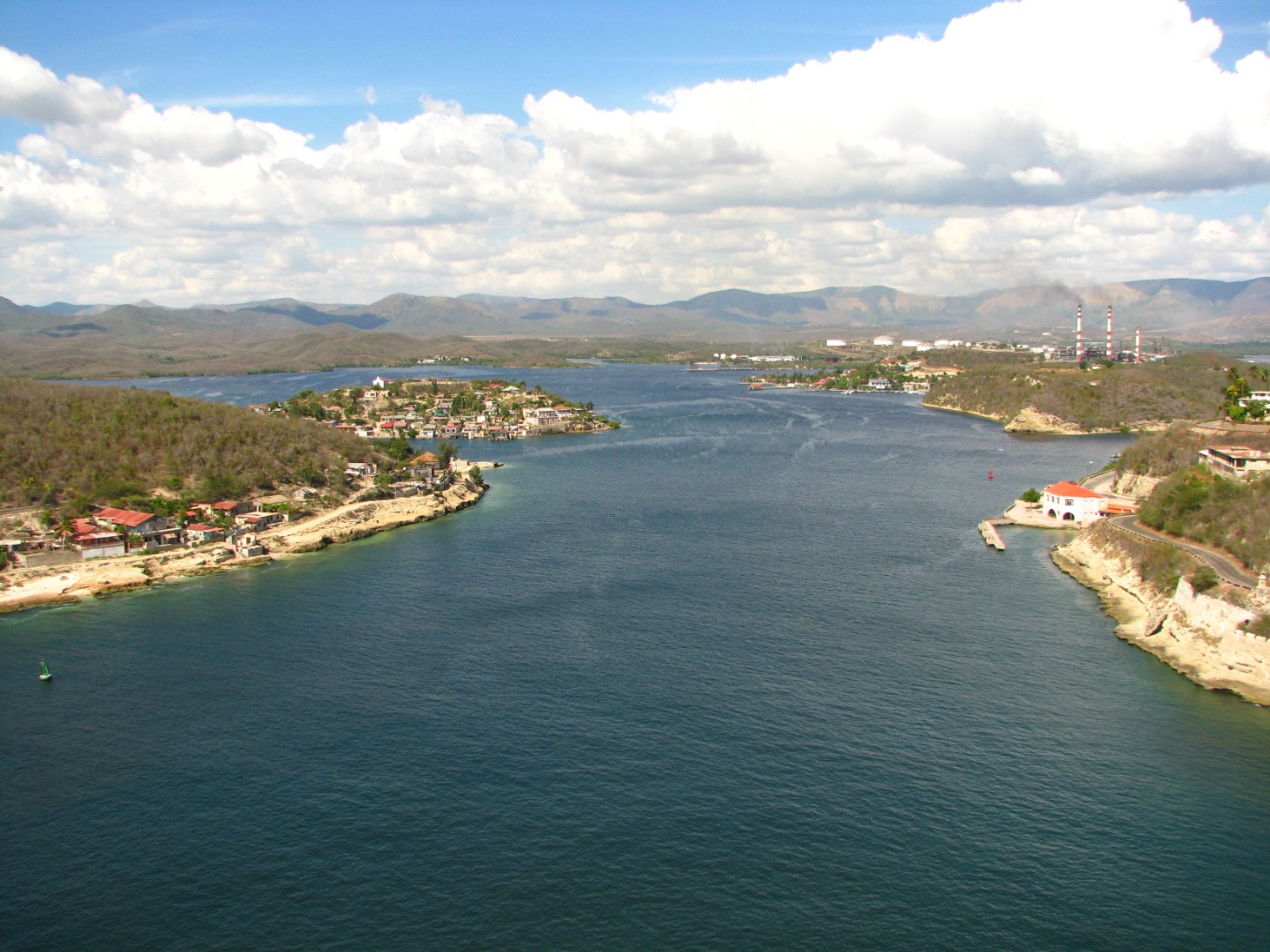
Scuba Diving in Wrecks of the Hispanic - Cuban and North American War of 1898. "COAL SHIP USS MERRIMAC".
“Archaeological Park of the Natural and Cultural Underwater Heritage Battle of Santiago de Cuba”. Declared a National Monument in 2015.
General description:
It consists of seven archaeological sites (Playa Siboney, Las Cuatro Bocas, Playa Mar Verde, Rancho Cruz - Buey Cabón, Ensenada de Juan González, Aserradero and Playa La Mula), whose environmental and archaeological characteristics differ from one site to another due to the very demarcation of the sites along the southeastern coastal strip of the province of Santiago de Cuba. It covers a territorial extension of some 64,824 nautical miles, equivalent to some 120,051 km along the coast from Siboney beach, belonging to the municipality of Santiago de Cuba, to "La Mula" beach, referring to the municipality of Guamá.
The area of the coastal strip in the southeastern part of the province of Santiago de Cuba was the scene of one of the most transcendental naval events in the history of humanity. The bloody and uneven Naval Battle, which culminated in the sinking of the fleet of Vice Admiral Pascual Cervera y Topete, put an end to Spanish colonial rule in America, and with this gave way to the rise of the most powerful empire in the history of mankind, the United States of America.
The vestiges of that naval crusade make up what is currently known as the Underwater Archaeological Park "Naval Battle of Santiago de Cuba". This is made up of seven archaeological sites where the wrecks linked to the landing and the naval conflict lie, as well as all those material evidences belonging to the ships that are related in one way or another to the events, such as: masts, masts, remains of the rigging of the mastheads, ironwork, parts of the artillery sites, thick and medium caliber projectiles, flushes, balusters and mechanisms of the propulsion system. Similarly, among the remains that lie on the seabed, in more than a century of rest and biological activity, special ecosystems have been articulated where the sessile fauna and marine flora have merged with the wrecks in a symbiotic entity that protects them mutually.
For many years these sites have been of special attraction for researchers, archaeologists, divers and tourists in general, justified not only by the transcendental historical value of the famous Battle of the Sea, but because it is a real privilege to enjoy today the dives in these wrecks located in an environment of spectacular beauty, in which the Sierra Maestra mountain range bursts into the Caribbean in an abrupt and irregular manner, cut by canyons and riverbeds and estuaries that extend into pebble-covered deltas and low-lying areas, forming mangrove-covered wetlands under the shelter of virgin inlets and coves: ecosystems that support incredible biological diversity.
It is a privilege to learn about history through these wrecks, exceptional witnesses to the events of the Naval War of 1898, and to decipher the language they bequeath us, a treasure of the Underwater Cultural Heritage, which preserves the right of future generations to enter a transcendent page of universal history.
ARCHAEOLOGICAL SITE: “LAS CUATRO BOCAS”. Wreck: Great Ship "USS Merrimac".
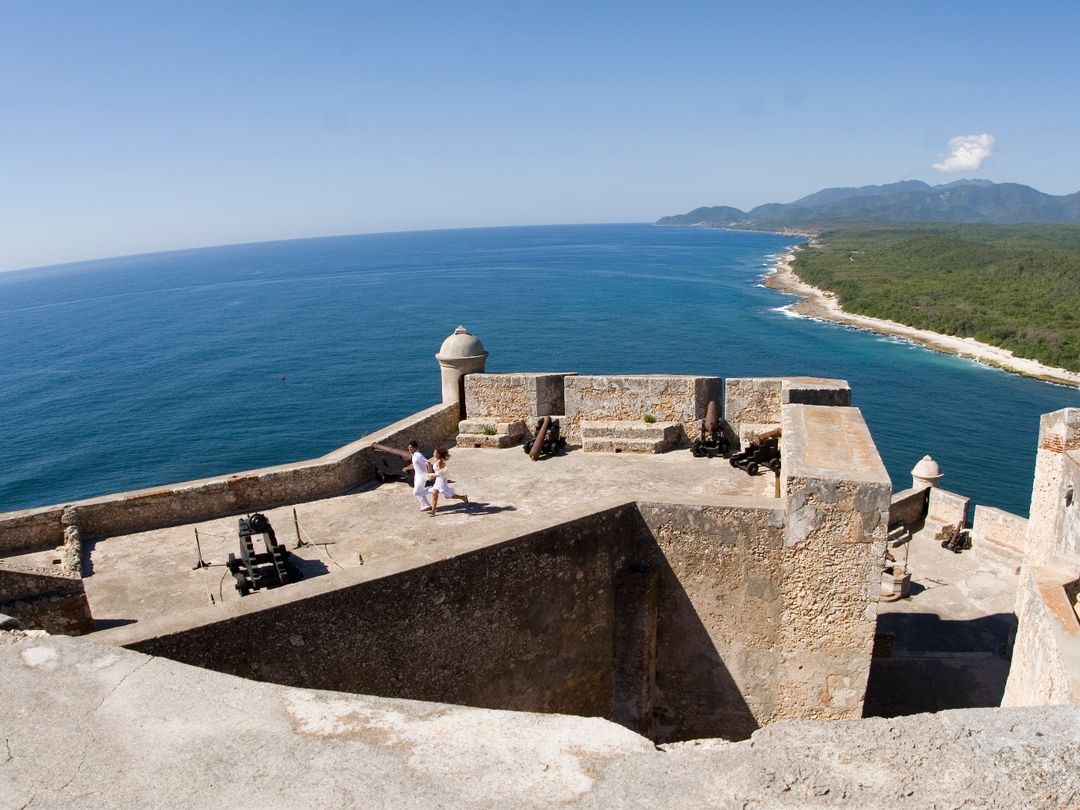
- Site: Bahía de Santiago de Cuba, the wreck is within the perimeter of the “Castillo del Morro” site, a World Heritage Site.
- Municipality: Santiago de Cuba
- The wreck "USS Merrimac" is located in the place known as "Las Cuatro Bocas", oriented from stern to bow in its imaginary line of bay at 13 ° NNE, about 190 meters from the Ciudamar jetty, 206 meters from Punta Churruca, 200 meters from Cayo Granma and 211 meters from Socapa. Likewise, it is resting at various depths: from 23 meters from the stern and 19 meters from the bow.
Historical antecedents:
-
The "USS Merrimac" was built in November 1894 at the "Swan & Hunter" shipyards in Wallsend, England, under the name "Solveig". It was purchased by the US Navy in April 1898, which was renamed "USS Merrimac". He was active in the ranks of the North American Naval Navy as a supply coal ship, and as such was part of a naval squadron, commanded by Admiral William T. Sampson, who participated in the Hispanic American Cuban war.
-
Once the conflict between the United States and Spain has been declared, and with the armored cruiser "New York", the flagship of Admiral Sampson, in Key West, the cable offices that arrived on board specified that the Spanish fleet of Vice Admiral Cervera was at anchor in the port of Santiago de Cuba.
-
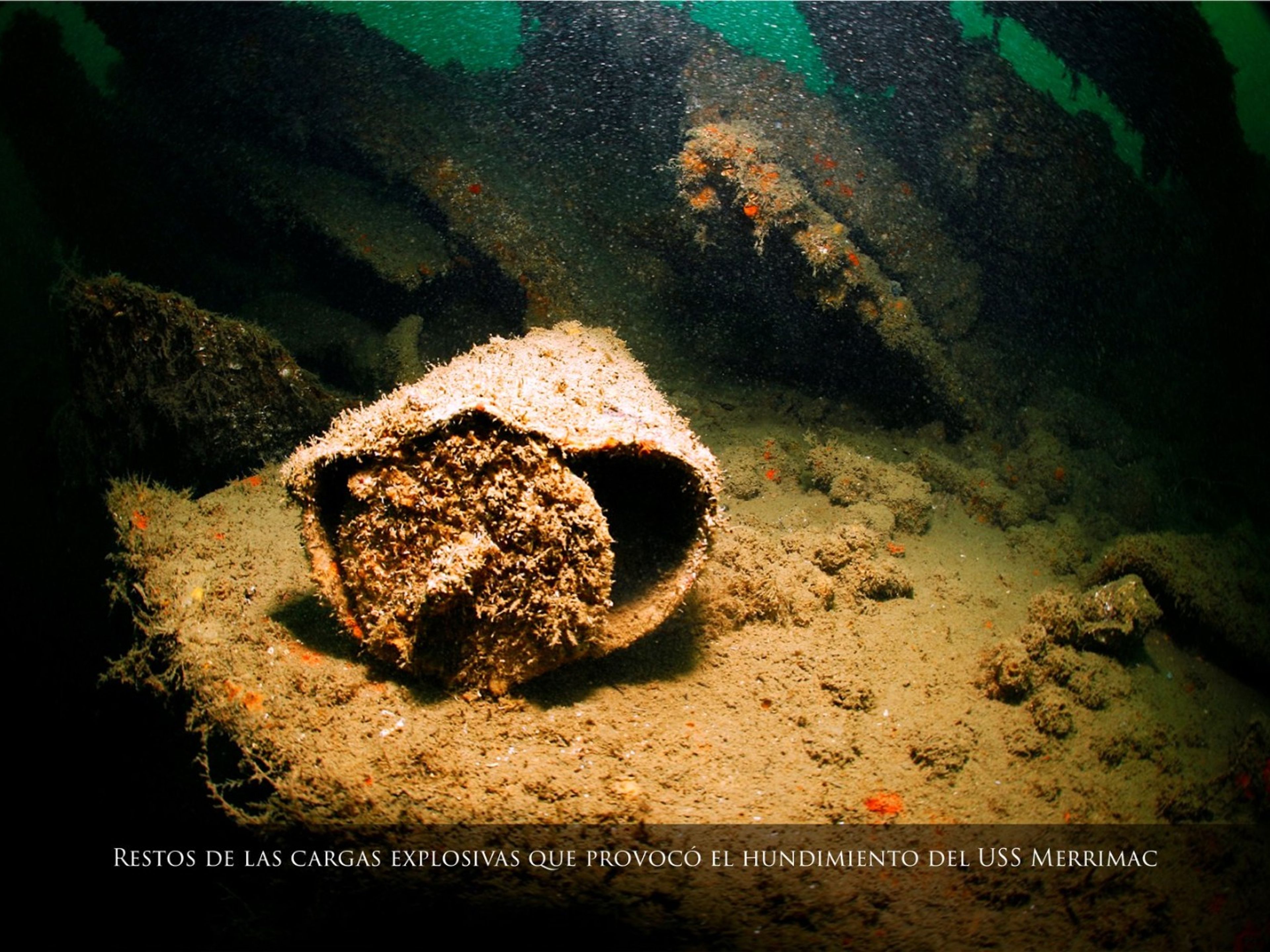
In these circumstances, Admiral Sampson proposes to Lieutenant Hobson, a naval engineer, the plan to sink the "Merrimac" in order to block the exit from the port of Santiago de Cuba and reduce the city at the lowest possible cost. The excellent plan, consisted essentially in sinking a ship of sufficient size in an area of the channel, so that its bathymetry would allow it to be blocked and thus prevent the departure of the Spanish ships. A minimum command of seven men would be used who, taking advantage of the night, would carry out the operation planned by Hobson down to the last detail. The cargoes would be placed below the waterline and when they exploded they would flood the watertights necessary to sink the "Merrimac" quickly at the planned time, after releasing an elbow anchor which would make the ship be braced, which would leave it practically crossed in the narrow channel at the entrance to the Bay of Santiago de Cuba.
-
The "USS Merrimac" departed on June 3, 1898, at 4 a.m., the 101-meter-long U.S. charcoal ship headed for the narrow entrance to the bay of Santiago de Cuba, first very slowly and then at full speed to achieve it's military objective of obstructing the departure of Vice Admiral Pascual Cervera y Topete's fleet to the sea.
-
On the fateful morning of July 3, Lieutenant Hobson would feel, from his cell in San Pedro de la Roca del Morro Castle, what seemed like a holocaust of roars, explosions, voices of command, despair and confusion. From his cell in the fortress, and within sight of him, the tops of the 'Merrimac' masts and part of his chimney appeared as silent witnesses to the disaster that only a few yards separated the wreck from the proper place, after a previous, meticulous, chosen plan, which would certainly have changed the course of history.
-
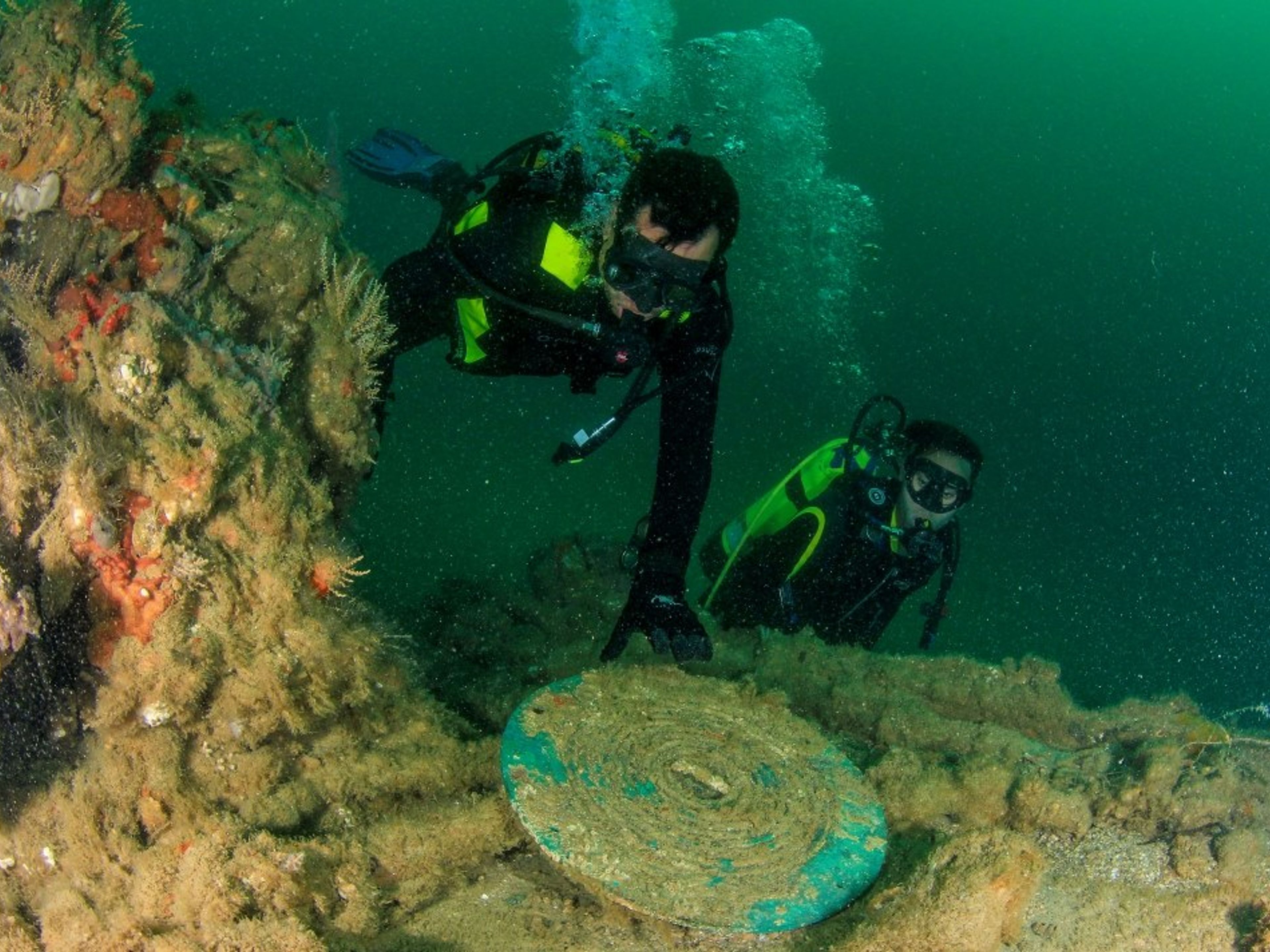
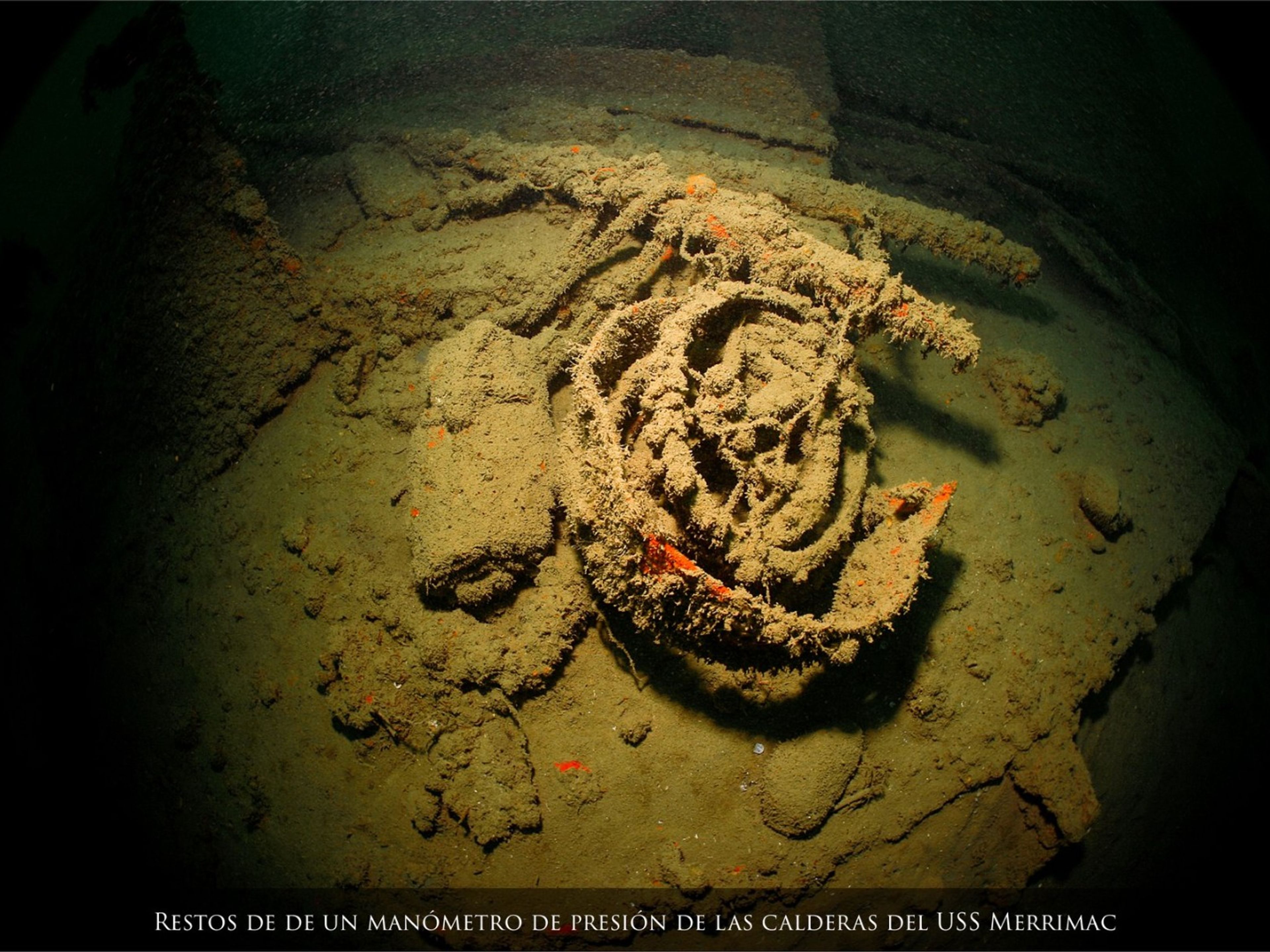
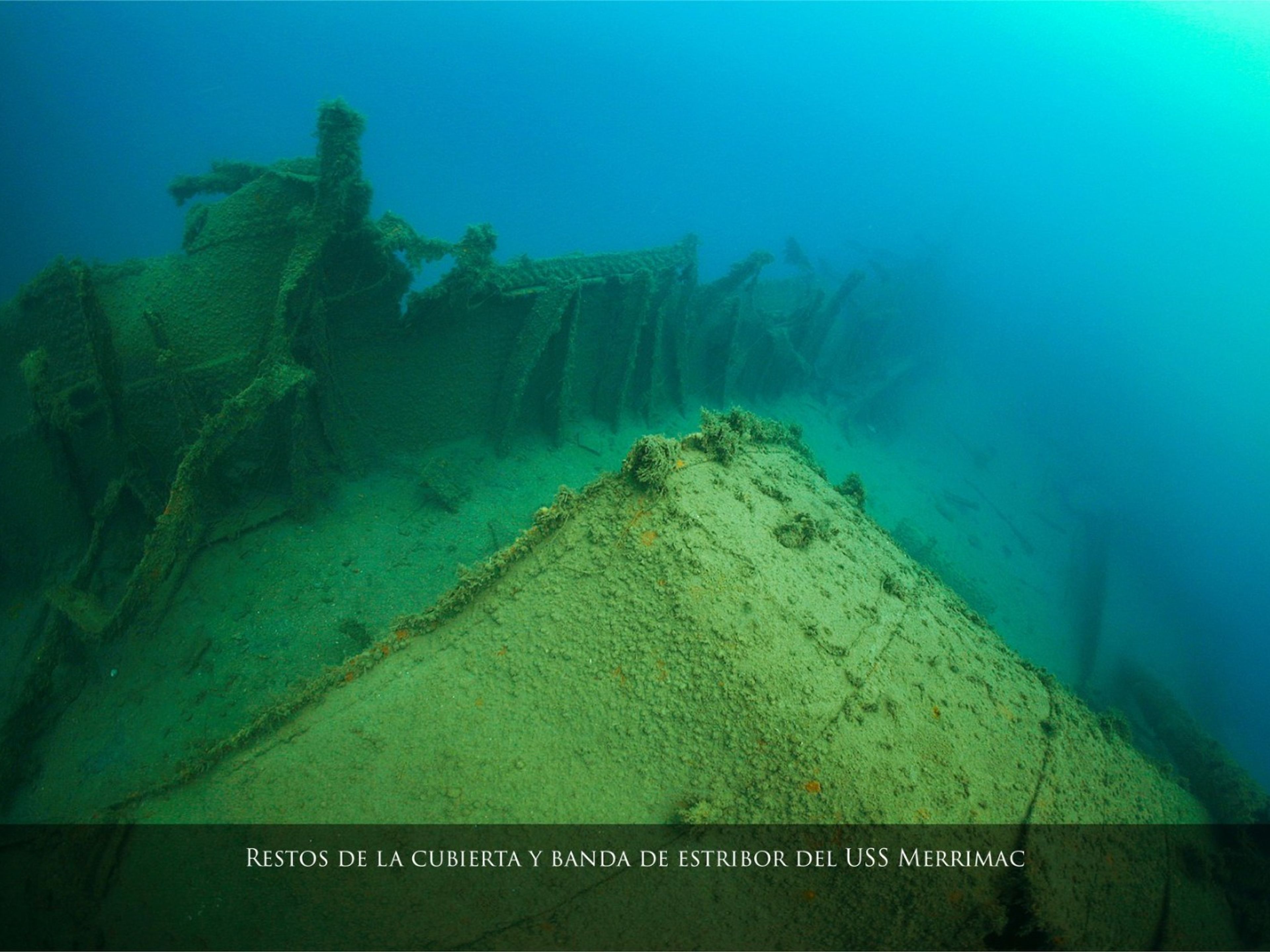
All that information is a dream story that comes true once you descend to the archaeological site. When diving in the wreck you will find evident traces of the violent combat that will take the magnificent coalman to his unfortunate end.
TECHNICAL CHARACTERISTICS OF THE SHIP "USS Merrimac":
- Name of vessel: 1894: "Solveig"; 1897: "USS Merrimac"
- Type of vessel: Cargo ship adapted to Carbonero.
- Flag: United States.
- Shipyard: Swan & Hunter, Wallsend, United Kingdom.
- Launch date: 12 April 1898, by the US Navy.
- Commander: Lieutenant Henrry Person Hobson Chief of Command.
- Crew members: Only 7 men in command.
- Length: 101 meters.
- Beam: 60 feet.
- Strut: 30 feet.
- Draft: 8.31 meters.
- Displacement: 4,976 tons.
- Maximum speed: 14 knots.
- Type of bow: Broken.
- Decks: One continuous steel and wooden deck.
- Rudder: Aft, spade on the outside of the transom with shaft running to deck.
- Shielding: No.
- Deck Shielding: No, unarmored steel decks.
- Barbets: No.
- Machinery: English.
- Type of machinery: 1 steam engine, with triple expansion.
- Feeding type: Coal - X tons.
- Power: X- CV with forced draught.
- Boilers: German.
- Propulsion: 2 propellers.
- Mast: 2 masts with davit and a central chimney distributed at bow and stern.
- Artillery: No.
Diving services included:
- Basic diving equipment,
- Compressed air tank.
- Leaded belt.
- Assistance of a guide instructor with international certificate, who will make an informative briefing of the immersion to be done.
- Boat that takes them from the diving center to the diving points (In principle the dives leaving from Punta Gorda Marina will be done by diving boat).
The service includes:
- Diving equipment, air tank, belt with weights, the assistance of an internationally certified instructor guide, who will do a briefing of dive to be made, and the use of the boat that leads from the dive center to dive sites.
- Professional diving instructor service for every 6 diving clients.
Not included:
- Transfer service to and from the hotels to the Marina Marlin Santiago de Cuba.
- Tips.
Very important notes:
- All clients must be over 12 years old (between 12 and 18 accompanied by a guardian), present their diving certification and valid passport.
LIABILITY WAIVER AND EXPRESS ASSUMPTION OF RISKS FOR THE PRACTICE OF DIVING BY THE CLIENT:
- Clients must sign a liability waiver to be able to practice diving activities in Marinas Marlin dive centers where among other points:
- The CLIENT acknowledges that snorkeling, freediving and scuba diving are potentially hazardous activities that carry a risk of serious injury and/or death and/or property damage and agree to assume all risks associated therewith.
- The CLIENT acknowledges that compressed air diving carries some inherent risks: decompression sickness, embolism or other hyperbaric injuries requiring treatment in a hyperbaric chamber may occur and that the CLIENT expressly assumes all such risks.
- The CLIENT must comply with the ship's safety guidelines and diving safety guidelines, in addition to complying with local regulations and legislation.
- The CLIENT agrees and certifies that he/she is fully aware of and expressly assumes all such risks and all other risks involved in conducting such boat trip, shore excursions and dives, conducted as leisure dives or as part of a dive class.
- The CLIENT agrees that they are in good physical and mental health for diving, that they do not suffer from any medical condition contraindicated for diving, that they will not dive under the influence of alcohol, nor under the influence of any drug contraindicated for diving. In case of taking any medication, the CLIENT declares that he/she has consulted a doctor and has the authorization to dive in the conditions of this activity while under the influence of the medication/drug.
- The CLIENT must declare: That ___ yes/no ___ has a personal insurance policy (covering the diving activity). If yes, he/she must specify which company is contracted and the policy number.
- The CLIENT declares that he/she releases the dive center from responsibility for any incident that may occur to the client, without being attributable to the dive center or its auxiliary staff. The CLIENT declares that he has been duly informed by the dive center staff and is fully aware of the risks of accidents involved in diving activities, which he assumes full responsibility and declares that if he or anyone, including his heirs or representatives, should be affected, they will not establish any claim against the dive center, its officers, instructors or employees, nor against the AGENCY.
Marina Marlin Punta Gorda Dive Center:
- The Dive Center serves the Santiago de Cuba city hotels.
- Departure capacity by 10 Pax.
- Frequency: 1 daily departure according to the tide tables of Santiago de Cuba showing high and low tides and the weather conditions of the bay.
Difficulty degree: High.
Distance to cover in the tour (Roundtrip): 5 km approximately.
Approximate tour duration (total): 1.30 hours approximately.
Very important note: It is mandatory for clients to present their official diving certification.
Very important note: For safety reasons and protection of underwater heritage, customers may never directly touch the wreckage of a shipwreck and must strictly follow the instructions given by the diving instructors.
- Recommended: light clothing, swimsuit, towels, sunglasses, hat, sunscreen and photographic camera.
- We recommend that the client can bring their own diving mask.
- The client can bring his complete diving equipment if he wants to.
- We recommend that the client can bring his/her personal dive computer.
- We recommend that the client can bring one or more bottles of mineral water to stay hydrated as well as light foods rich in protein or fruit.
More Information
- 2.00 hrs
- Variable dive schedules according to tide tables from Santiago de Cuba showing high and low tides of the bay.
- Tour guide included
- Children not allowed
- Offered inSpanish and English
Options and Availability
Collective diving tour (1 dive)
Tour in diving boat with professional diving instructor service in several languages and 1 dive.Policies and Conditions
- A minimum of 5 divers is required for the excursion. Holiplus will reconfirm 48 hours before the departure of your tour. If the provider decides to cancel, for not meeting the minimum required amount of passengers, Holiplus will offer an alternative tour or fully refund cost of your trip.
- Transportation not included in the services of the diving excursions in Santiago de Cuba. The client must arrive at the Marina Marlín in Punta Gorda by his own means 30 minutes before the indicated time of the excursion.
- The excursion can be cancelled in an unexpected way if the general weather conditions and especially in the sea advise it. This does not imply any responsibility or penalty for the agency and the marina company offering the service. In principle we will try to change the date of the excursion for the following days when the conditions improve. If this is not possible, we will proceed to refund the total value of the excursion paid by the client previously.
- The client must present a valid diving certificate issued by an internationally recognized diving organization.
- The client must sign a waiver of responsibility for diving as a risky activity, releasing the agency and the marine company offering the service from any legal responsibility, before leaving for the excursion.
Cancellation Policy
- In case of cancellation up to 72 hours before the departure time of the excursion, a penalty of 10% of the excursion fare will be charged.
- Regarding cancellations made between 72 and 24 hours before the departure time of the excursion, a penalty of 50% of the excursion fare will be applied.
- Cancellations reported within 24 hours before the departure time and No-Show (no presentation at departure time), a penalty of 100% of the excursion fare will be applied.
- Booking fees and credit card surcharges cannot be refunded in case of cancellation.